



Innovation Isn’t Added. It’s Applied Where It Matters
Innovation in mobility isn’t about what you introduce. It’s about how effectively you apply it across real programmes.
This is where innovation becomes more practical. It’s not about introducing something entirely different but about improving how existing elements perform. How policies are shaped, how assignments are managed, and how decisions are made in real time. This is where the impact is most vividly felt.

Policy isn’t static. It’s where innovation begins.
Policies are often viewed as fixed frameworks to be followed and maintained. But in practice, they are constantly tested. Exceptions occur, business needs shift, and employee expectations change.
Innovation isn’t about rewriting policy for its own sake. It’s about understanding when it no longer reflects reality and adjusting it accordingly. The most effective programmes see policy as something that evolves, not something that stays unchanged.
Advisory is where clarity is created.
Global mobility rarely involves clear-cut decisions. Trade-offs are constant—between cost and experience, speed and risk, consistency and flexibility. This is where advisory plays a vital role.
Innovation, in this context, means providing clarity. Helping organisations understand their options, make informed decisions, and implement them in alignment with their priorities. It’s not about adding complexity but about making complexity easier to manage.
Assignment management is where innovation is realised.
Defining a programme is one thing; delivering it consistently across real assignments with real people in real time is another.
Innovation manifests in managing assignments daily - how issues are anticipated, how stakeholders are aligned, and how progress is maintained. While often unseen, it directly influences outcomes.
Better decisions lead to better outcomes.
At its core, mobility involves a series of decisions—some strategic, some operational, many made under pressure. The quality of these decisions determines the programme’s success.
Innovation isn’t about presenting more options; it’s about making better choices—supported by adequate understanding and insight. Here, structured advisory and practical experience make a significant difference.
Innovation needs application, not just discussion
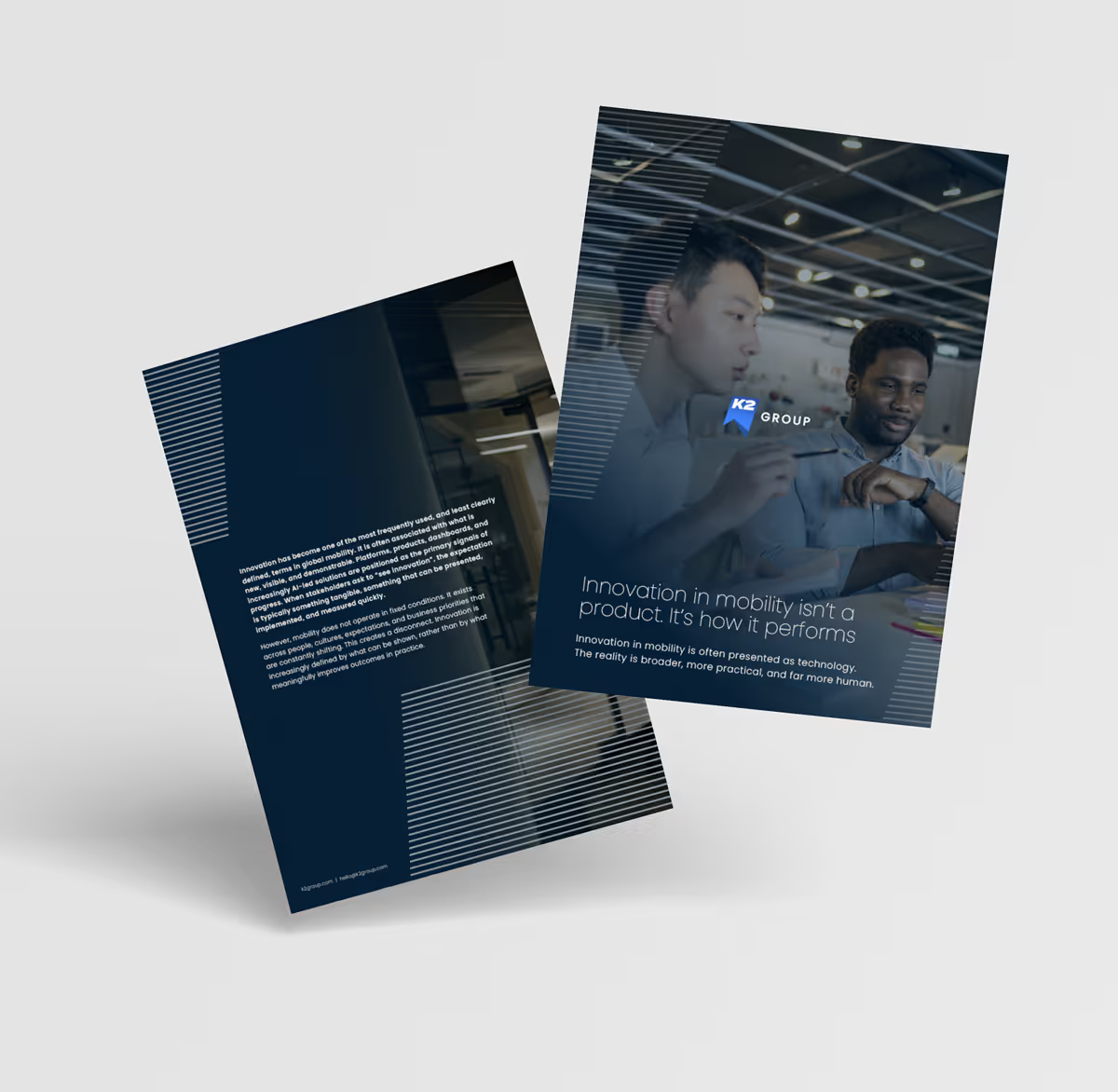
Innovation in mobility isn’t external to the programme. It is embedded within it - how policies evolve, how assignments are managed, how decisions are made. To explore this further, access our full research paper via K2 Group. It offers a broader view of how innovation is practically applied across mobility programmes.
If you want to strengthen the day-to-day operation of your programme, connect with the K2 Indx team. This is where innovation becomes practical, actionable, and measurable. You can also share your views on our LinkedIn article, or stay updated through our K2 Group Collective newsletter.

Frequently asked questions
Straight answers to the questions we hear most about workforce mobility.
What does innovation mean in global mobility?
+
Innovation in global mobility is less about introducing new tools and more about improving how existing programmes perform - how policies evolve, how assignments are managed and how decisions are made in real time. Most programmes are adapted over time rather than built from scratch, so applied innovation matters more than novelty.
Should mobility policy change over time?
+
Yes. Policies are constantly tested by exceptions, shifting business needs and changing employee expectations. The most effective programmes treat policy as something that evolves when it no longer reflects reality, rather than a fixed framework.
What does a mobility advisory service do?
+
A mobility advisory service helps organisations understand their options, weigh trade-offs between cost, experience, speed and risk, and implement decisions in line with their priorities. Its role is to make complexity easier to manage, not to add more options.